After a concussion, it is common to focus on symptoms such as headaches, fatigue, or trouble concentrating. But when reading, screen use, driving, or busy environments make those symptoms worse, vision may be part of the picture.
A concussion can affect more than eyesight. It can interfere with how the eyes move, focus, work together, and process visual information. A post-concussion vision evaluation looks beyond the eye chart to identify visual challenges that may be making daily activities harder.
Why a standard eye chart may not tell the whole story
Seeing clearly at a distance is important, but it is only one part of visual function. Someone may have 20/20 vision after a concussion and still struggle with double vision, light sensitivity, blurred vision, dizziness, or difficulty tracking words across a page.
These symptoms can happen when the brain has trouble coordinating the visual skills needed for everyday tasks. For example, the eyes may have difficulty shifting focus between a phone and a distant object, following moving text, or staying aligned during reading.
A neuro-optometric rehabilitation evaluation helps identify these functional concerns and how they may be affecting school, work, driving, exercise, and other routines.
What does a post-concussion vision evaluation assess?
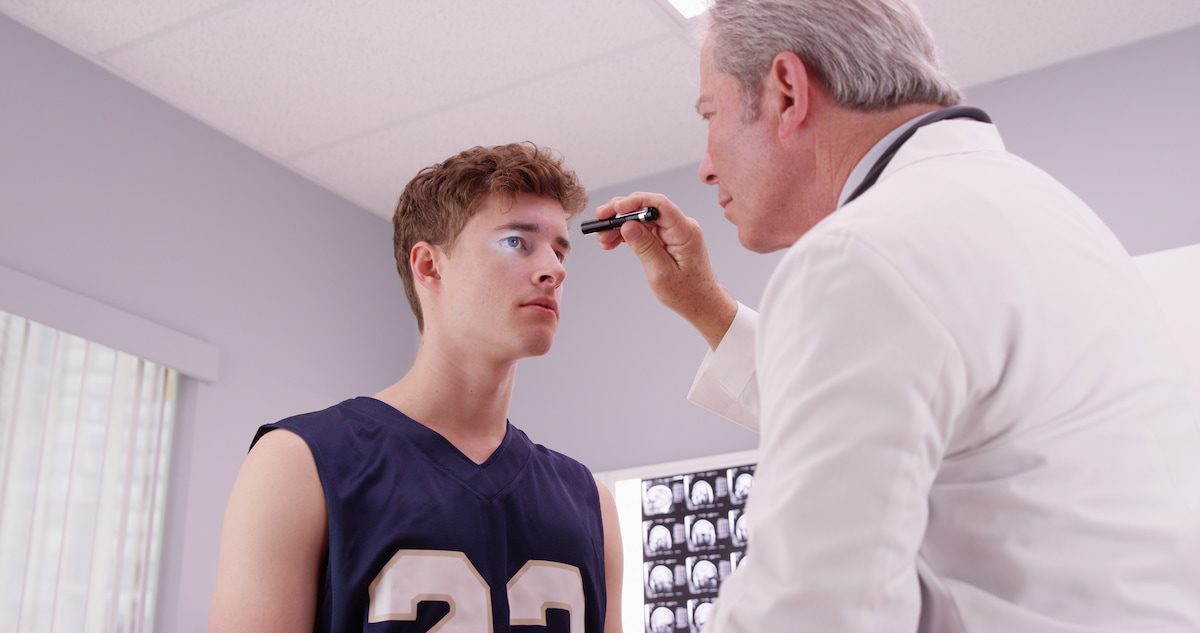
The evaluation begins with a detailed conversation about the injury, current symptoms, and the activities that trigger or worsen them. Symptoms may include headaches, motion sensitivity, eye strain, light sensitivity, balance concerns, or feeling overwhelmed in visually busy places.
Your doctor may then assess several aspects of visual function, including:
- Visual acuity: How clearly you see at different distances
- Eye movements: How smoothly and accurately your eyes track, scan, and shift between targets
- Eye coordination: Whether the eyes work together comfortably and efficiently
- Focusing ability: How well the eyes adjust between near and far tasks
- Visual processing and perception: How the brain interprets visual information
- Balance and spatial awareness: Whether visual input may be contributing to disorientation or movement-related symptoms
The exact testing depends on your symptoms and needs. The goal is not simply to confirm that you can see clearly — it is to understand how your vision performs when your brain is processing information in real-world situations.
What happens after the evaluation?
Your results help guide the next step. If the evaluation identifies concussion-related visual deficits, your doctor may recommend a personalized treatment plan through neuro-optometric rehabilitation for concussion.
Care may include visual-motor exercises, perceptual learning activities, or specialized lenses to reduce visual discomfort. The plan is tailored to the skills affected and the activities you want to return to, whether that means working on a computer, reading comfortably, driving, exercising, or keeping up at school.
Because concussion recovery can involve more than one system, care may also be coordinated with other providers, such as neurologists, physical therapists, or occupational therapists.
When should you schedule an evaluation?
Consider a post-concussion vision evaluation if symptoms persist or reliably worsen with visual tasks. Common reasons to seek care include:
- Headaches or eye strain after reading or screens
- Blurry or double vision
- Light sensitivity
- Dizziness in stores, crowds, or moving environments
- Difficulty concentrating or keeping your place while reading
- Trouble shifting focus between near and far distances
- Balance concerns or discomfort with motion
Recovery looks different for every patient. A thorough evaluation can help clarify whether visual function is contributing to ongoing symptoms and provide a practical plan for moving forward.